

Event management encompasses the entire process of bringing an event to fruition, from initial concept to successful delivery, ensuring it meets all objectives. Given the numerous tasks and stakeholders involved, it’s a complex and high-stakes undertaking.
This guide offers 10 best practices and top tips for event management, empowering you to stay on top of everything, from meticulous planning to seamless execution and beyond.
1. Define Event Goals and Objectives
One of the best practices for event planning is to establish clear, measurable goals. Are you boosting brand awareness or generating leads? Define your event’s success using the SMART framework — specific, measurable, achievable, relevant and time-bound objectives. Then, set key performance indicators (KPIs), such as registration numbers, to track your progress and ensure accountability.
2. Identify Your Target Audience
Identifying and understanding your audience is paramount for event success. Segment your attendees and create personas based on their demographics, psychographics, needs and behavior to craft experiences that resonate. This knowledge also enables effective strategic decisions on content and marketing, helping your event deliver significant value.
3. Set a Realistic Budget and Timeline
Effective budgeting allows for wise resource allocation and prevents overspending. Beyond listing anticipated expenses like decor and entertainment, prepare for the unexpected — allot between 10% and 15% of your total budget as a contingency fund. You should also negotiate with vendors for combo deals or discounts to maximize value without compromising quality.
A structured timeline ensures everything is completed on time and serves as your event’s roadmap. Work backward from the event date, breaking it into precise weeks or days. Establish clear milestones and firm deadlines, prioritizing tasks based on urgency and importance.
4. Choose the Right Venue
Your venue can make or break your event — it defines attendees’ experience and logistical flow. Therefore, careful selection is critical. Ensure it provides:
- Ample parking space.
- An accessible location.
- An optimal cost-value balance.
- Comfortable capacity for all attendees.
- Ambience aligned with your event’s vision.
- Essential amenities, like AV equipment and Wi-Fi.
5. Build Your Team and Assign Roles
An event’s success is never achieved solo. Comprehensive planning and flawless execution require an experienced team. These are some essential positions to fill:
- An event manager who oversees all planning and coordination
- A marketing lead who drives promotion and registrations
- A logistics coordinator who manages physical operations and setup
- A volunteer coordinator who recruits and manages volunteers
Every role should also be clearly defined and understood to reduce confusion and bottlenecks. Explicitly establish responsibilities using a RACI chart. This tool clarifies tasks by who is:
- Responsible: These team members perform the work.
- Accountable: These team members own the outcome.
- Consulted: These team members provide input.
- Informed: These team members need to be kept updated.
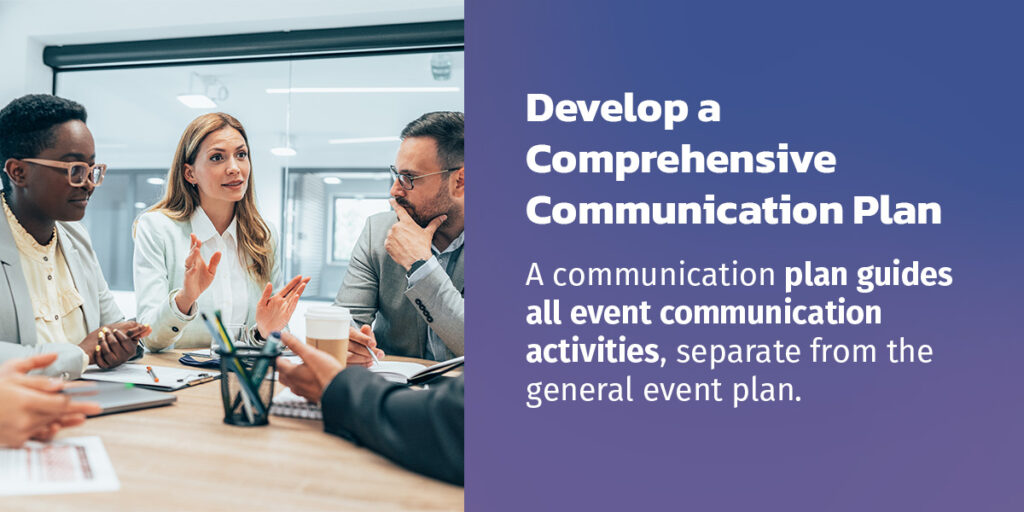
6. Develop a Comprehensive Communication Plan
Mastering event communications is critical — even the most perfectly planned events can falter without it. Distinct from your event plan, your communication plan serves as your master guide for all communication activities throughout the event life cycle:
- Pre-event: Before your event, your focus should be on promotion and sharing essential information.
- During: While your event is happening, you should have strategies in place for real-time logistics and issue management.
- Post-event: After your event, communications should center around follow-ups and feedback.
Keeping your team, vendors and attendees informed is the backbone of a smooth and secure execution. Part of ensuring that all stakeholders receive precise and timely information is selecting the right communication channels.
Internal communication tools are critical for effective event management and planning. Chat apps, collaboration platforms and videoconferencing tools ensure your team is aligned on goals, roles and timelines. Two-way radios are ideal for on-site coordination in loud venues, facilitating immediate troubleshooting and fostering proactive problem-solving for a polished execution. Public address systems are also essential for making mass announcements and broadcasting emergency messages.
For attendees, use apps, digital signage and social media to deliver schedules and updates while encouraging engagement.
7. Ensure Smooth Logistics and Operations
Coordinating vendors and suppliers is one of the core strategies for event planning that can maximize success, allowing for smooth logistics and operations. Expect issues and always have a backup plan — select multiple reliable vendors for key services, such as catering and logistics. You should also maintain clear communication to stay on track, even in the face of any changes.
Seamless crowd management and event safety are equally important. Proactively identify potential hazards, such as overcrowding and bottlenecks, to ensure a seamless and efficient execution. Implement clear pathways, zones and barriers to guide flow. You should also ensure emergency exits are visible and unobstructed, in line with OSHA requirements. Your on-site security personnel play a critical role in protecting attendees. They should be thoroughly trained in risk recognition, emergency response and de-escalation techniques.
For calm, safe responses to emergencies and handling unexpected situations, predefined protocols are essential:
- Outline triggers and actions: Identify scenarios and assign specific duties.
- Determine a hierarchy: Everyone must know their reporting structure.
- Keep communication direct: Messages must be actionable and informative.
8. Market and Promote Your Event
With your event meticulously planned, the next critical step is to get the word out and drive registrations or ticket sales. A multichannel marketing strategy is essential — utilize relevant platforms, such as social media, email and your website, tailoring content to each one. Targeted ads can further boost visibility. This coordinated strategy helps ensure promotional content for your event effectively reaches its intended audience.
Social media is vital for generating buzz before your event. Here are some tips for creating engaging content:
- Run strategic contests and giveaways.
- Highlight key entertainment and activities.
- Post teaser videos and dynamic countdowns.
- Share compelling behind-the-scenes content.
- Utilize branded hashtags — encourage attendees to use them too.
Finally, track your predefined KPIs, such as registrations, social engagement and website traffic. Analyze metrics in real time for insights to implement new tactics. Make immediate adjustments during the promotional period to ensure optimal performance and maximize outreach.
9. Execute Your On-Site Event Plan
Once the big day has arrived, the focus shifts to on-site event management. Your staff and volunteers are the face of your event, shaping the experience and ensuring seamless operations. Prep them with a pre-event briefing to build confidence, clarifying the agenda, key contacts and emergency protocols for successful execution.
Running a smooth event isn’t about avoiding problems — it focuses on handling the unexpected calmly and effectively. Contingency plans for everything from bad weather to technical issues can prevent minor hiccups from becoming major disruptions. This way, your team can act quickly and respond confidently.
10. Evaluate and Follow up Post-Event
Your work continues even after attendees leave — post-event actions are crucial. To maximize value, learning and improvement, share post-event surveys with staff, attendees and other stakeholders. This way, you can collect feedback on what worked, areas for improvement, their overall satisfaction and how willing they are to return and recommend your events.
You should also evaluate KPIs such as attendance, registrations, engagement, social reach, surveys, revenue and leads. Compare this crucial data against your initial objectives to analyze your event’s performance.
The data and insights you gain should inform your planning for the next event. This continuous optimization improves future executions, ensuring each builds on the success of the last.
Facilitate Event Success With Communication Rental Services
Successful events hinge on thorough planning, strategic team building, seamless communication and reliable execution. At Communication Rental Services, we understand that instant and secure coordination is vital for effective event control. We deliver two-way radio rentals for any event, with flexible rental terms and nationwide delivery of ready-to-use devices.
In addition to offering dependable equipment from industry-leading manufacturers, such as Motorola Solutions, we partner with you to provide comprehensive support, including a 24/7 hotline, expert repairs, training and licensing.
Request a quote today to help make your next event a success.