You’ve got a great event planned, but it can still run into issues without a solid communication strategy in place. Critical coordination failures, such as vendors missing vital setup details or security personnel struggling during a crowd surge, directly impact your success.
Think of your event communication plan as your master guide for sharing information with everyone involved, from staff to attendees. Distinct from your event plan, this strategy is your roadmap for all communication activities. It outlines your goals, strategies and timelines, ensuring the timely and accurate flow of information. Learn how to develop a communication strategy and why you need one for your next event.
A robust communication plan is your essential blueprint for managing all the communications needed for a successful event. When done right, this plan can help you:
To build an effective plan, you must first pinpoint your exact needs for event communications. You can do this by:
Identify the different groups that will need information about your event, such as:
Each group has distinct information needs and delivery requirements. For example, attendees need timely updates and schedules before your event, whereas staff and volunteers require tools that allow them to communicate in real time.
With your stakeholders in mind, determine the different types of information you’ll need to share at each stage of your event, such as:
By analyzing these requirements, you ensure each stakeholder receives the right message at the right time. This helps create a seamless, well-coordinated experience for everyone.
When developing a communication plan for your event, consider its type. For example, a corporate conference has different needs than a festival. A festival communication plan should ensure that the various stages, security and medical teams can coordinate across vast, noisy areas with clear channels.
On the other hand, corporate events require two-way channels for managing session changes and technical adjustments over multiple rooms. Discreet earpieces can also facilitate professional, unobtrusive communication in quieter settings.
Once you understand your event’s communication needs, it’s time to build your plan. An effective communication strategy should include:
Define what success means for your event by setting clear internal and external communication objectives. Ensure your goals are SMART:
For example, an internal goal could be to implement a two-way radio system 10 days before the event to reduce incident response times by 30%, ensuring instant and effective communication.
You must also set key performance indicators (KPIs) to measure your success. For external objectives, track metrics like registration numbers, email open rates and social media engagement. For internal goals, monitor incident response times, adherence to communication protocols and the speed of operational information dissemination.
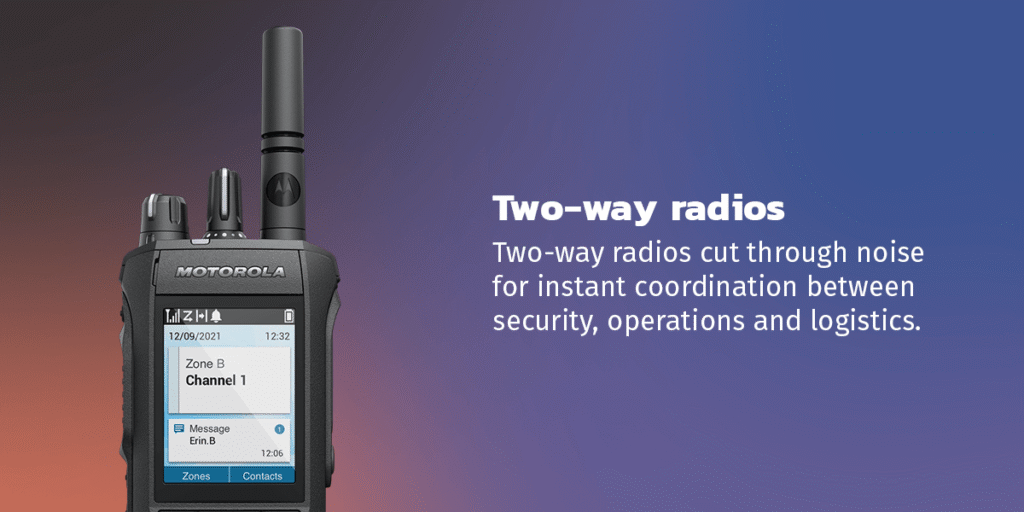
You must select the right communication channels for your staff, operations teams and attendees.
Internal channels can include:
For attendee-facing information, you could use the following external channels:
A master timeline is a chronological roadmap for your communication activities before, during and after your event. This is where your analysis of your communication requirements will come in handy.
Here’s a look at the different stages:
For challenging environments with large crowds, loud noise and outdoor conditions, predefined crisis and emergency protocols are essential. This part of your communication plan can empower your team to stay calm and respond efficiently and safely.
Protocol components must include:
With your event planning complete and a robust communication strategy in place, follow these best practices for implementation and management:
Assign clear communication roles to keep your staff focused and reduce confusion. Chart primary and backup contacts for every area — including logistics, safety, marketing and on-site management — outlining their respective authorities to ensure swift information flow. For large venues, appoint a central coordinator to facilitate consistent, unified messaging across all teams.
Train your staff thoroughly on communication protocols and the technology they’ll use at your event. If they’ll be using two-way radios, emphasize proper etiquette. Standardize communication with clear phrases, such as “copy” for message receipt or “all clear” for resolved situations. This ensures that your team communicates clearly and efficiently, keeping operations running smoothly.
Your communication lead should continuously monitor channels, track KPIs and gather real-time feedback. This allows you to adapt to unforeseen circumstances — a communication plan should be flexible. Adjust messaging, channels and timing throughout the pre-event, during-event and post-event phases to ensure your plan remains effective and aligned with your objectives.
A successful event communication strategy depends on a solid plan and the right technology. Communication Rental Services understands this and provides two-way radio rental solutions.
Whether you’re organizing a concert at a large outdoor venue or a sports event in a stadium, we have the equipment to meet your event’s requirements, with both short-term and long-term rental options available. With our large, in-stock inventory of radio devices and accessories delivered nationwide, you’ll receive two-way radios ready for instant use.
Beyond offering access to dependable devices from manufacturers like Motorola Solutions, we’re your communications partner. We provide support both before and during your event, offering assistance with everything from staff training and obtaining the necessary licensing to an emergency 24/7 hotline and expert repairs.
Request a quote today to discuss how we can optimize your event’s communication strategy.